|

|
603.314.8841 voip
603.386.6083 eFax
PO Box 101
Hollis, NH 03049
|
Professional
Training
|
|
Dr. Garber
has the privilege and
responsibility of providing
continuing education training to
family law professionals across
the United States and around the
world. He is well-respected for
his ability to communicate
complex concepts in clear,
practical terms, his unique
integration of media, the
scientific literature, and the
law, and his engaging style.
Participants take away new
insights, hands-on skills, and
practical tools that help to
better understand and serve
children's needs.
Dr. Garber tailors the content,
duration, and medium of each
training to group needs. For
some this means a 1-hour webinar
recorded and available to
participants on an ongoing
basis. For others this means a
half-day, full-day, or 2-day
live and interactive in-person
event.
Training topics in family law
correspond with Dr. Garber's
areas of practice and
publications. Some are
illustrated below. Others can be
created to suit your group's
particular needs and interests.
|
|
|
|
|

|
|
Is
your group planning a
continuing education program?
|
|
Dr. Garber mixes current research in
child development, family systems,
and psychological assessment with
insight into the law
to communicate
and often challenge best practices.
Dr. Garber's work in courts around the
world, as an evaluator, consultant,
and expert witness together with his
extensive professional publications combine
to make trainings challenging, cutting
edge,and hands-on
practical learning opportunities for
all involved.
|
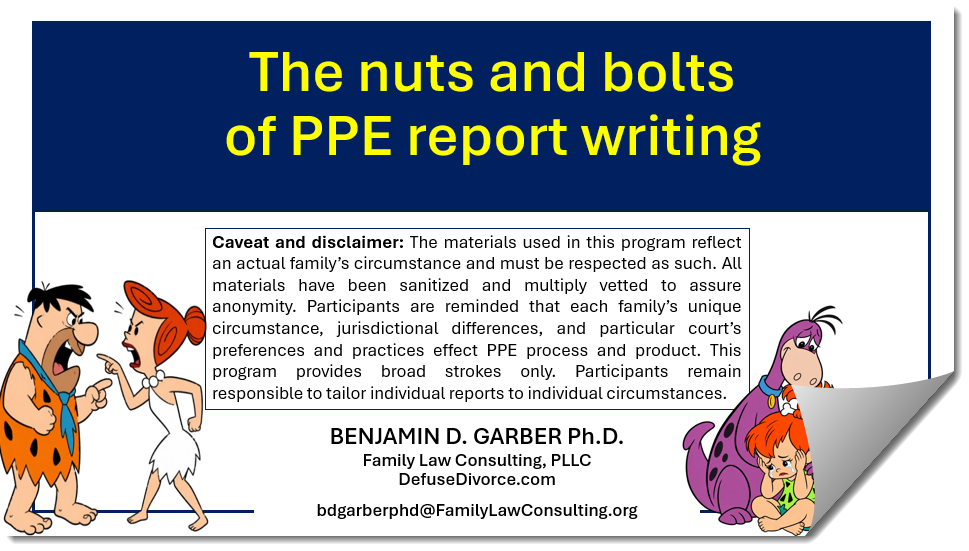
The nuts and
bolts of
PPE report
writing
Child custody
evaluators commonly invest
40+ hours to generate
comprehensive summaries of
a conflicted family's
dynamics but seldom
receive any feedback. Dr.
Garber shares his detailed
summary report describing
Fred and Wilma
Flintstones' very
dysfunctional relationship
and how best to understand
Pebbles' needs. This
program introduces the
idea of frontloading
questionnaires, the POOP
observational protocol,
and standardized methods
of communicating family
dynamics to parents, their
lawyers, and the courts.
|
|
|
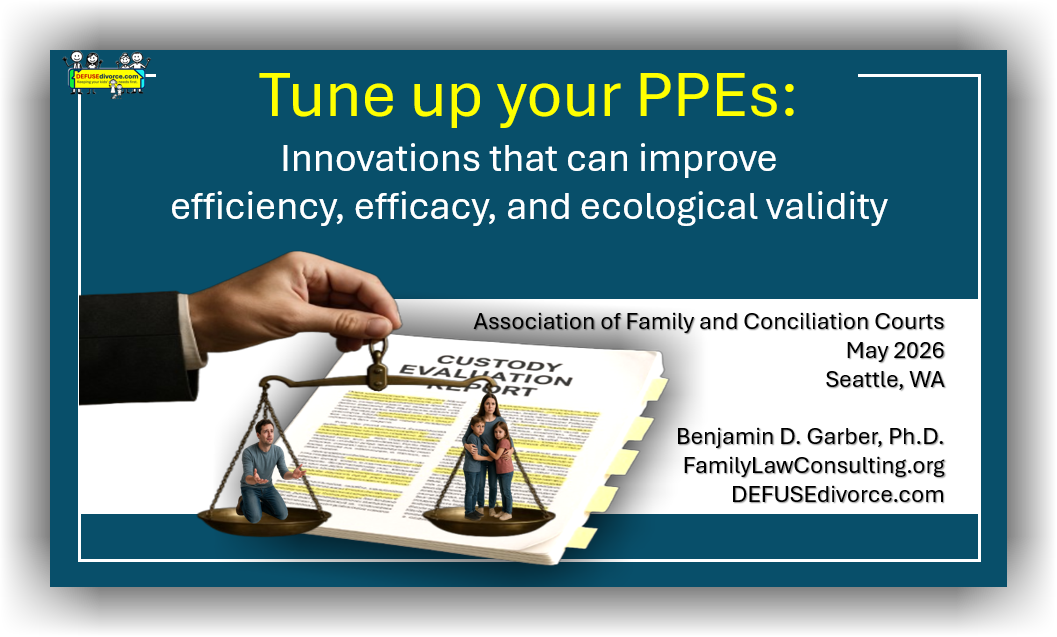
Tune
up your PPEs:
Innovations
that can improve
efficiency,
efficacy, and ecological
validity
This very
practical training helps
evaluators improve
parenting plan evaluation
(PPE) satisfaction,
efficiency, efficacy, and
ecological validity by
integrating five
peer-reviewed,
innovative
process-oriented data
collection methods.
|
|
|
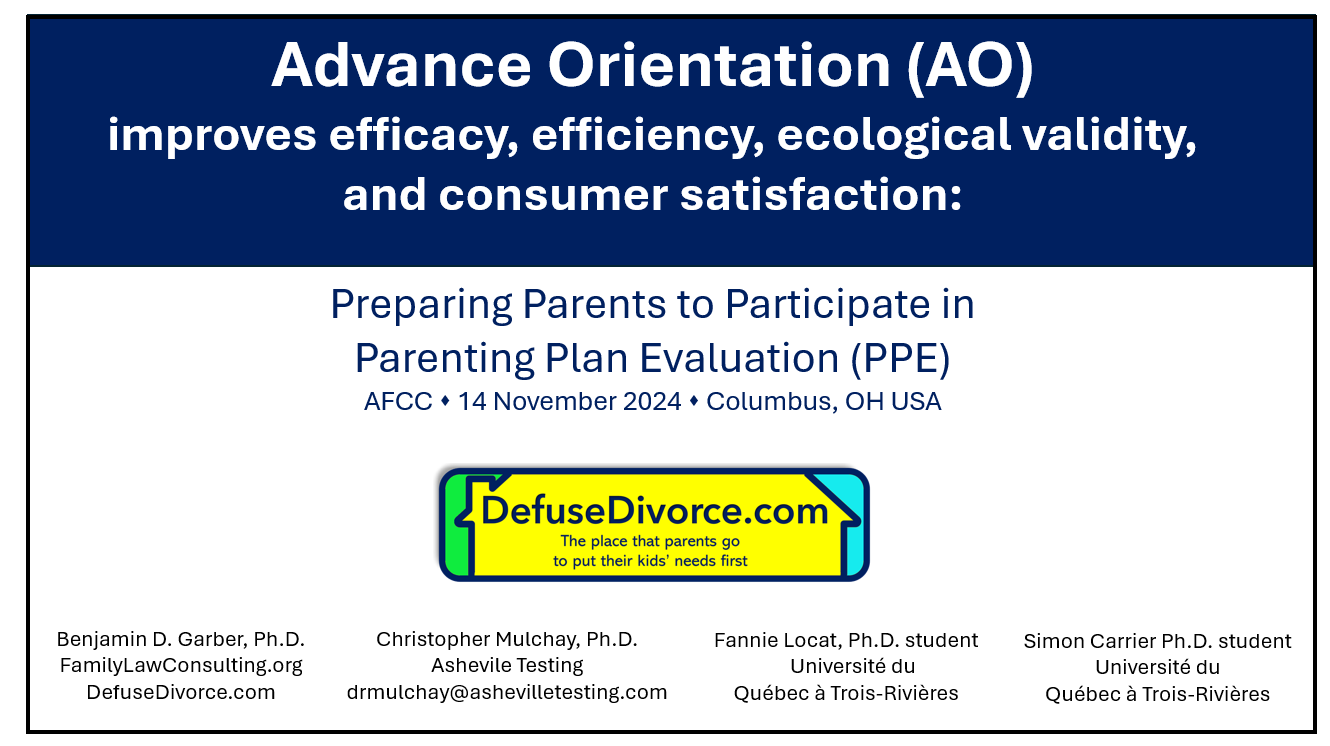
Advance
Orientation (AO)
improves
efficacy, efficiency,
ecological validity,
and
consumer satisfaction
When
consumers of a service
participate in an advance
orientation to that
service,
they are more satisfied
and the service is more
efficient and effective.
This program introduces
ADVANCE ORIENTATION to
family law
professionals and the
impressive research that
demonstrates the value of
programming available at DEFUSEdivorce.com.
|
|
|
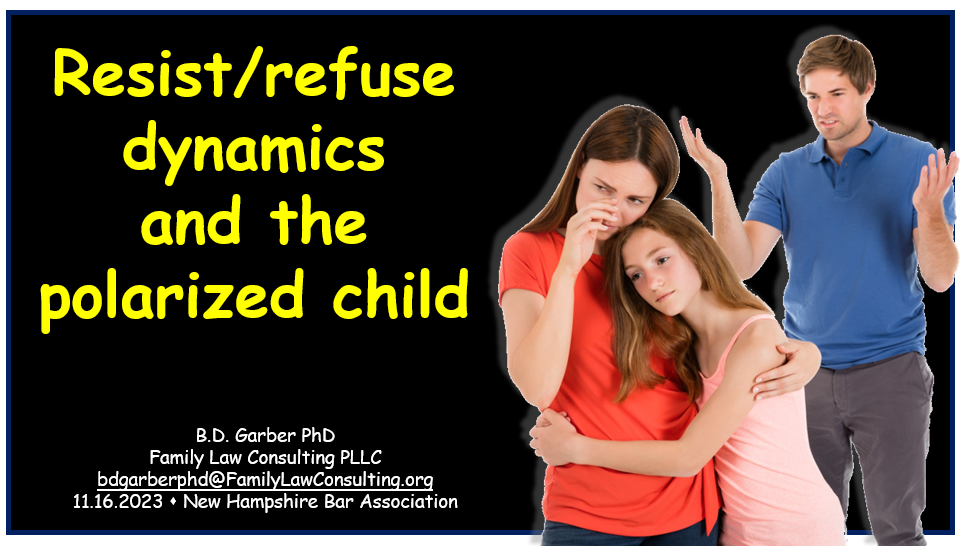
Resist/Refuse
Dynamics
and the
polarized child
Dr. Garber
introduces an evaluative
rubric that helps to
minimize bias, avoid
premature closure, and assure that
the full spectrum of
dynamics and practical
pressures are examined. The "Five Factor
Model" intended to
determine the presence of
alienating behaviors is critiqued as
biased and circular.
|
 |
|
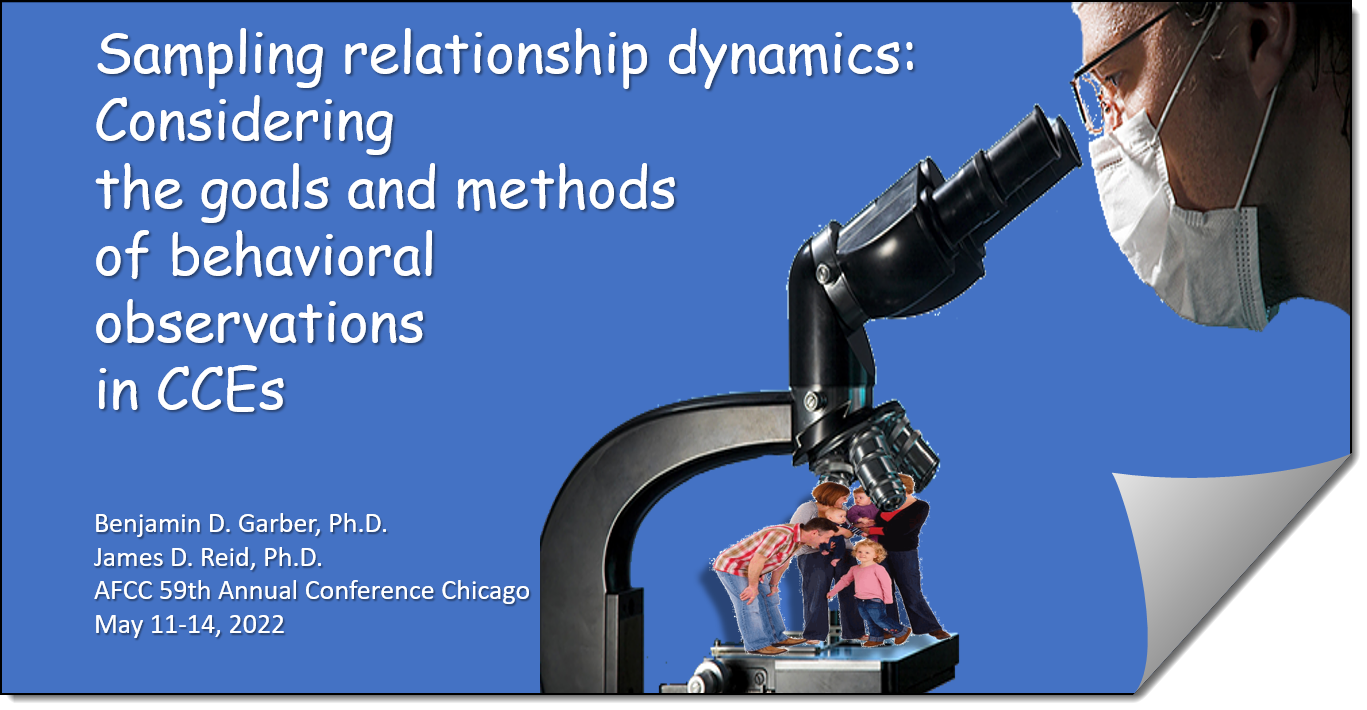
Sampling
relationship dynamics:
Considering the goals
and methods of
behavioral observations
in CCEs
Evaluators are
expected to rely upon
diverse methods.
This full day
training examines how
best to realistically
sample family
relationships, emphasizing a
process-oriented
protocol.
|
 |
|
Dynamics,
not diagnoses:
Focusing the family law
lens on relationship
"fit"
Mental health
professionals working in
family law often
inadvertently apply the
medical model of individual
diagnosis into the
courtroom. Family law is
about relationship
dynamics, not individual
diagnoses. Of particular
interest is the value of
individual adult
psychometrics (i.e., tests,
inventories) in family law
matters.
|
 |
|
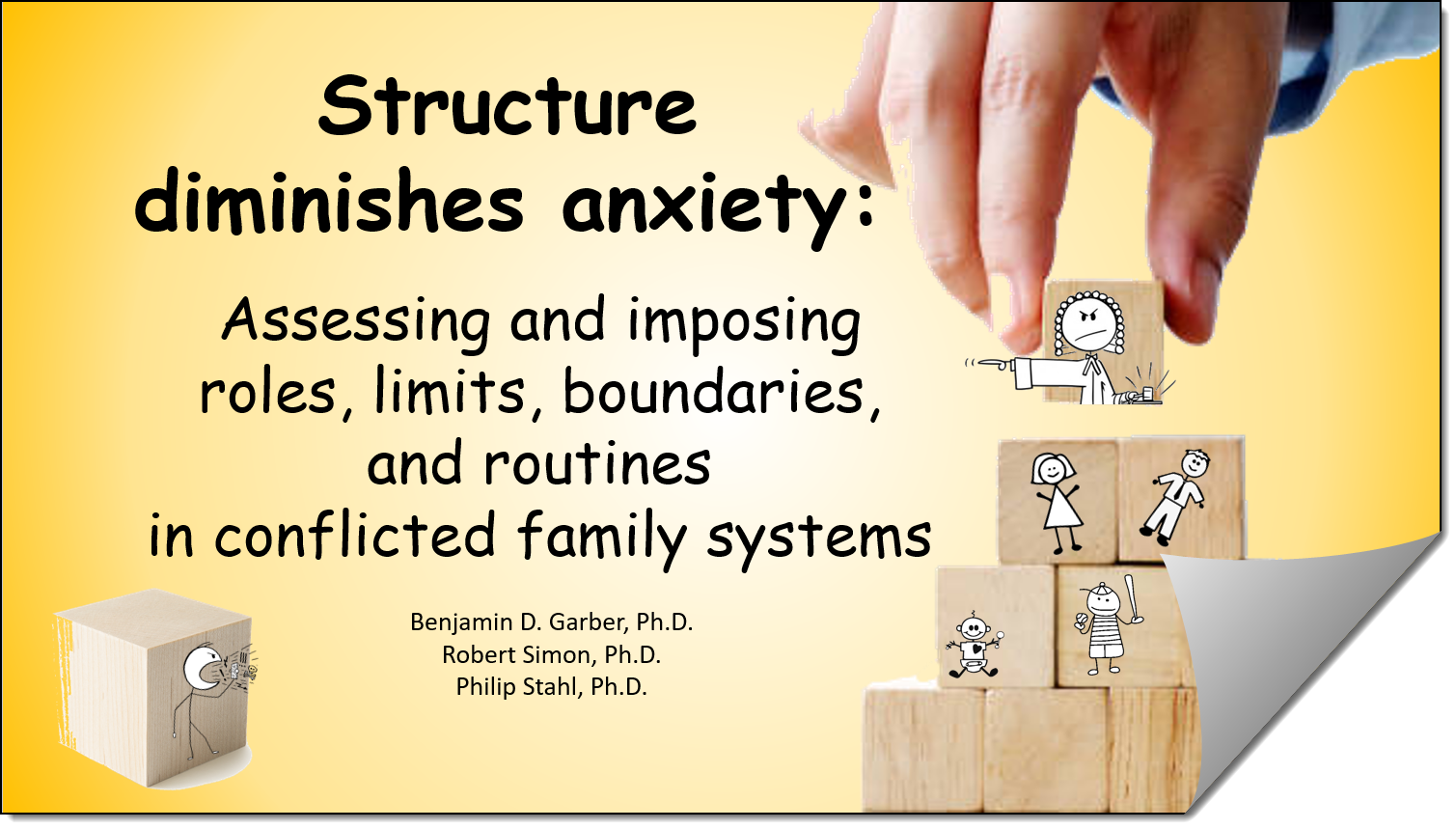
Structure
diminishes Anxiety:
Assessing and imposing
roles, limits,
boundaries,
and routines in
conflicted family
systems
Understanding
the structures that
define each family, the
structures that define
your practice, and the
structures inherent in
the judicial system is
critical to our success
evaluating
and intervening in the
best interests of each
child.
|
 |
|
Letting the
air out of your
professional balloon:�
Managing our
own emotions and
modeling
self-care for our
clients
This work
is hard.
Family law
professionals are at
very high risk of
compassion fatigue,
vicarious trauma, and
burn-out, all of which
trickles down to impact
the people we serve. How
do you let the air out
of your balloon? How do
you get refueled? How
can you be a healthier
model of self-care?
|
 |
In-person?
Remote? Hybrid?
|
Reaching
the largest audience possible benefits
your group and your community.
Dr. Garber is comfortable in all three
formats and invites creative solutions
that
optimize professional participation
and development.
Can I record
Dr. Garber's presentation for
later use?
|
In most
cases, yes.
Terms and limits associated with
technology may apply.
Costs
and expenses
|
Costs
will include stipend, travel,
room, board, and comfort when
appropriate to format.
Dr.
Garber's stipend will
depend on your group's
resources,
how much time will be
required in preparation,
and how much time will be
necessary away from the
office.
When Dr. Garber travels to
conduct trainings,
its often cost-efficient
to schedule an advanced
small group consultation
prior to
(e.g., an informal
breakfast Q and A) and/or
following the large group
event.
|
|
Details
matter
|
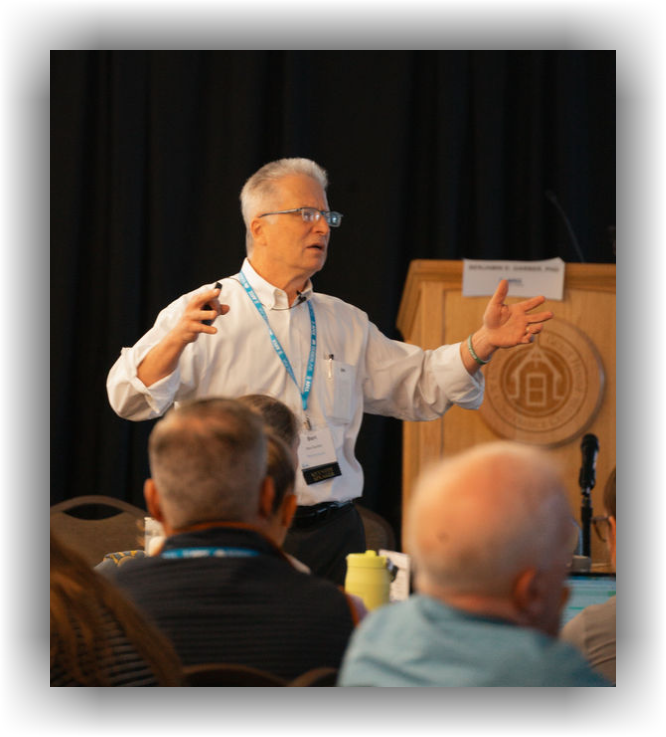
Dr. Garber is an engaged
and engaging in-person speaker.
He very strongly prefers NOT to stand
at a lectern
and instead prefers to walk among
participants,
eliciting contributions and answering
questions.
In many in-person settings, this
requires a lavaliere wireless
microphone
and camera mobility when the program
is video-recorded.
Distance programming (webinars)
are preferably hosted via ZoomTM.
Whenever possible, Dr. Garber will
provide program participants with
advance access to relevant
publications, assessment tools, and
associated resources.
|
DEFUSEdivorce.com
provides divorce- and
custody-litigating parents
with online advance orientation to the
many services
associated with the legal process.
|
(click image for brief
video)

|
Dr. Garber is the proud creator
and director of
DEFUSEdivorce.com
the place that
parents go to put their children's
needs first.
|
|
|
DEFUSEdivorce.com
provides online education,
orientation, and resources to divorcing
parents.
Research in medicine,
nursing, dentistry, public health,
psychotherapy,
genetics and numerous other fields has
demonstrated that
advance orientation improves outcomes,
efficiency, efficacy,
and consumer satisfaction.
1.
Divorce and custody litigation
create anxiety.
2.
Anxiety interferes with clear
thinking.
3.
Information diminishes anxiety.
4.
DEFUSEdivorce.com
provides litigants with a road
map that makes the many
services associated
with the legal process make
sense.
5.
Diminished anxiety means
- less
conflict
- more likely
and quicker resolution
- less stress
- less cost
- healthier
kids
|
How do divorcing
parents find
DEFUSEdivorce.com? |
|
- Courts order
custody litigants to
complete specific DEFUSEdivorce.com
programs
because advance
orientationimproves the
efficacy and efficiency of
interventions and
evaluations.
- Evaluators
require parents
to complete specific DEFUSEdivorce.com
programs
because advance
orientationdiminishes
anxiety and thereby improves
the ecological validity of
the data collected.
- Clinicians
refer
court-involved clients to DEFUSEdivorce.com
programs
because educated
consumers are more likely
to feel heard, are more
satisfied, and are less
likely to suffer the
stresses of litigation.
- Court-involved
parents refer
themselves to DEFUSEdivorce.com programs
because education,
orientation, and resources benefit their
children.
DEFUSEdivorce.com
provides
litigating parents
with online advance
orientation to the many
services
associated with the legal
process.
|
|
The
information contained in and linked from
this website is generic.
It must not be construed as constituting
legal, psychological, educational, or
medical advice.
Decisions relevant to any specific
individual, relationship, or family should
be based on
the considered opinions of professionals
familiar with the
unique culture, resources, strengths, and
needs of those affected.
|
|
|